
UWILD Rotterdam - Class Approved Underwater Inspection in Lieu of Drydocking
25 Years of Underwater Inspection, Maintenance and Repair Experience in the Port of Rotterdam
FN Diving provides professional Underwater Inspections in Lieu of Drydocking (UWILD), In-Water Surveys (IWS) and class-approved underwater hull inspections in the Port of Rotterdam, throughout the Netherlands and worldwide.
For over 25 years, FN Diving has supported international shipowners, technical managers, superintendents and vessel operators with underwater inspections, maintenance and specialised repairs.
Operating from our permanent base in the Port of Rotterdam and our operational base in Algeciras, Spain, our experienced commercial diving teams carry out underwater surveys while vessels remain safely afloat.
Our services are available 24 hours a day, 7 days a week.
Avoid unnecessary drydocking. Reduce off-hire time. Keep your vessel operational.
What Is an In-Water Survey (UWILD)?
An In-Water Survey (IWS), often referred to as UWILD (Underwater Inspection in Lieu of Drydocking), is an underwater inspection carried out while a vessel remains afloat.
When accepted by the vessel’s classification society, a UWILD may replace a scheduled drydock bottom survey, allowing the vessel to remain in service without the need for immediate drydocking.
In-water surveys are also performed to verify the condition of the underwater hull between scheduled surveys, investigate suspected damage or assess the condition of underwater components following an incident.
The inspection is carried out according to an agreed survey plan and the applicable classification requirements.
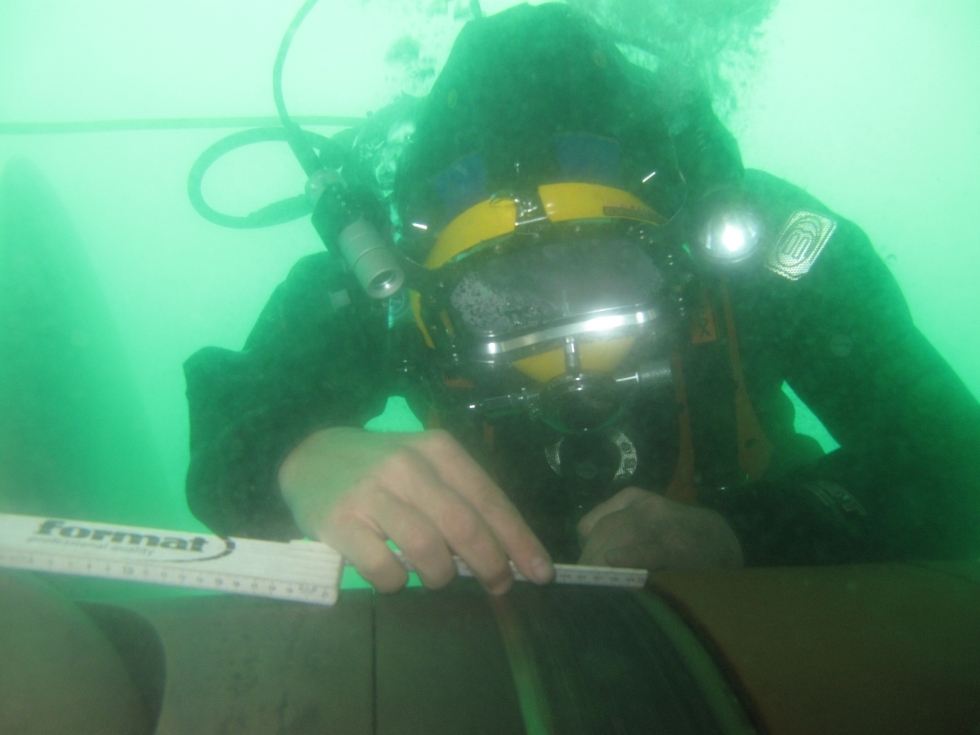
FN Diving performs underwater inspections with the attending classification surveyor and vessel superintendent monitoring the operation from the surface through live underwater CCTV.
This allows observations to be discussed, verified and documented immediately.
The result is a detailed technical assessment of the vessel’s underwater condition without necessarily removing the ship from service.
What Does an In-Water Survey Cover?
A typical UWILD inspection includes the underwater hull and all accessible components specified in the approved survey scope.
These generally include:
- Shell plating and underwater hull condition.
- Hull coatings, corrosion and structural damage.
- Propellers, propeller blades and hubs.
- Rudders, pintles, bearings and clearances.
- Stern tube seals and visible shaft components.
- Bow and stern thruster tunnels.
- Sea chest gratings and cooling-water openings.
- Overboard discharges and scrubber outlets.
- Sacrificial anodes and ICCP components.
- Bilge keels and underwater structural attachments.
- Areas previously identified by the crew, technical management or classification society.
Where visual inspection alone is insufficient, additional underwater measurements and Non-Destructive Testing (NDT) may be performed.
These can include ultrasonic thickness measurements, clearance measurements and other specialised underwater examinations.


How Is a UWILD Inspection Carried Out?
FN Diving follows a structured underwater inspection procedure designed to provide classification surveyors and technical managers with a reliable assessment of the vessel’s condition.
Our divers work according to a planned inspection sequence, ensuring that all required areas are examined and that the attending surveyor can follow the progress.
Step 1 - Survey Preparation and Planning
Before mobilisation, FN Diving coordinates the inspection requirements with the vessel’s technical management and classification society.
Preparations typically include:
- Reviewing the vessel’s underwater arrangement drawings.
- Identifying all required inspection locations.
- Reviewing previous survey findings.
- Confirming classification requirements.
- Establishing the inspection sequence.
- Assessing underwater visibility and working conditions.
- Preparing the necessary diving and inspection equipment.
The vessel’s operational condition, berth location and applicable port regulations are also considered.
Step 2 - Mobilisation of the Diving Team
FN Diving mobilises an experienced commercial diving team with the necessary underwater inspection equipment.
Depending on the survey requirements, equipment may include:
- Surface-supplied commercial diving systems.
- Professional underwater CCTV cameras.
- Underwater lighting systems.
- Two-way diver communication.
- Underwater measuring equipment.
- Specialised cleaning tools.
- Underwater NDT equipment.
- Remotely Operated Vehicles (ROVs).
The diving operation is conducted from a suitable diving support vessel, pontoon or shore-based position.
Step 3 - Live CCTV Inspection
During the inspection, underwater camera images are transmitted directly to the surface.
The attending classification surveyor and vessel superintendent can monitor the inspection in real time.
Two-way communication allows the surveyor to instruct the diver to examine specific areas more closely.
The inspection footage is recorded using equipment suitable for the applicable class survey requirements.
For confined, restricted-access or higher-risk areas, an ROV may be deployed where technically appropriate and accepted for the inspection scope.
This allows the surveyor to assess the underwater condition of the vessel while remaining safely on deck.
Step 4 - Underwater Hull and Structural Inspection
The underwater hull is systematically inspected according to the agreed survey plan.
Shell Plating
Visual inspection of the underwater hull for corrosion, damage, deformation, coating deterioration, cracks and other visible abnormalities.
Welded Connections
Inspection of accessible underwater welds and structural connections where required.
Bilge Keels
Examination of bilge keels, attachment points and visible structural condition.
Sea Chests
Inspection of sea chest gratings, cooling-water openings and accessible components.
Overboard Discharges
Inspection of underwater outlets, scrubber overboards and associated hull penetrations.
Cathodic Protection
Inspection of sacrificial anodes, ICCP components and visible corrosion protection systems.
Where marine growth prevents proper examination, selected areas can be cleaned before inspection.
Step 5 - Propeller and Stern Gear Inspection
The vessel’s propulsion equipment forms an important part of many underwater surveys.
FN Diving inspects:
- Fixed Pitch Propellers (FPP).
- Controllable Pitch Propellers (CPP).
- Propeller blades and blade tips.
- Propeller hubs.
- Rope guards.
- Stern tube seal areas.
- Visible shaft components.
- Accessible stern gear components.
The inspection focuses on identifying visible damage, deformation, corrosion, leakage indications and other abnormalities.
Where required, additional measurements can be performed.
Step 6 - Rudder and Thruster Inspection
The inspection may include the vessel’s steering and manoeuvring equipment.
Rudder Inspection
Examination of rudder plating, structural condition, pintles, accessible bearing areas and connections.
Rudder clearances can be measured when required and technically feasible.
Bow and Stern Thrusters
Inspection of thruster tunnels, propeller blades, protective gratings and accessible support structures.
Specialised underwater cameras or ROV equipment may assist where access is restricted.
Step 7 - Underwater Measurements and NDT
Visual inspections do not always provide sufficient information about the condition of a component.
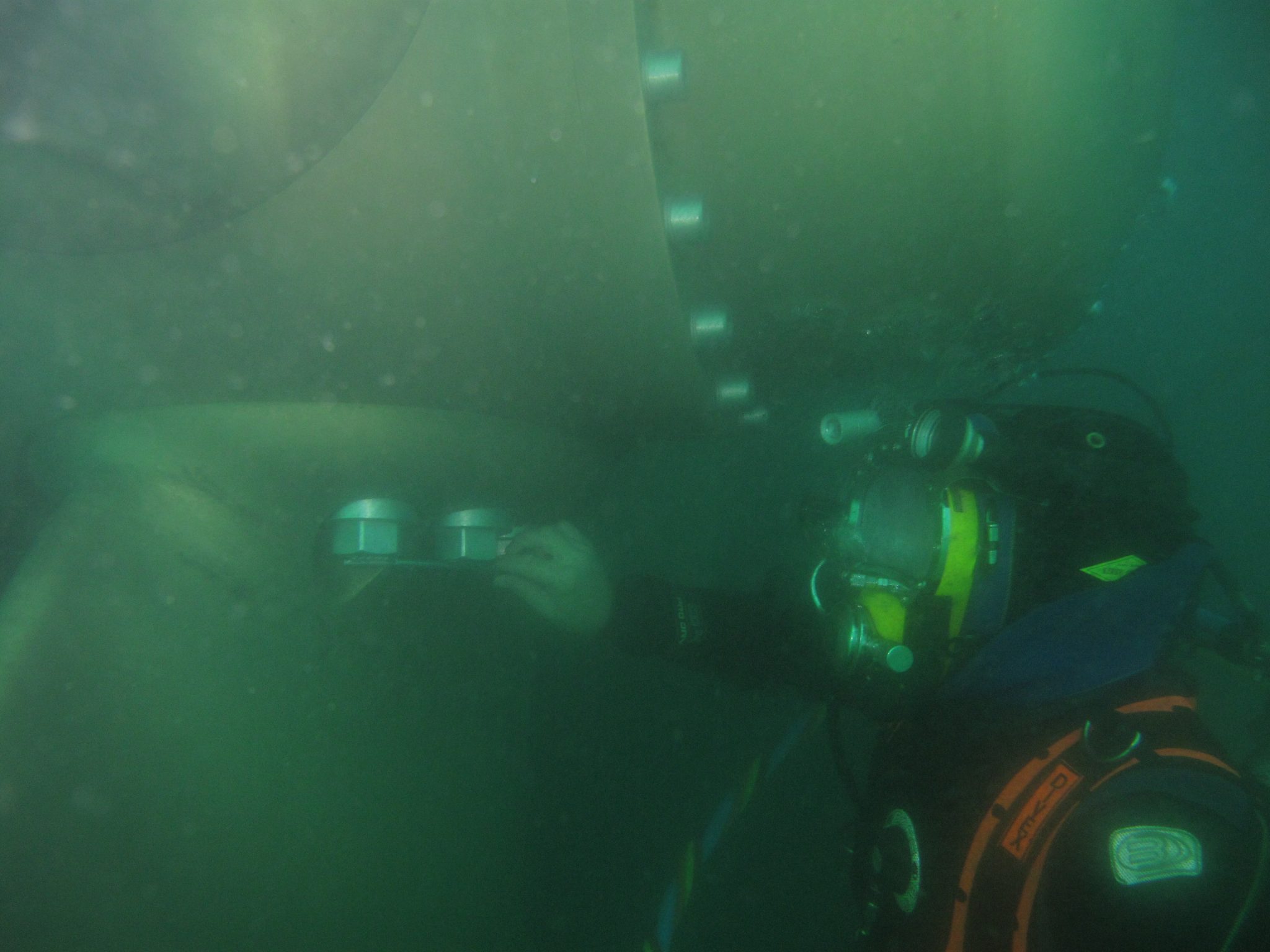
Where additional verification is required, FN Diving can perform or arrange specialised underwater measurements and Non-Destructive Testing.
Depending on the inspection scope, these may include:
- Ultrasonic thickness measurements.
- Rudder clearance measurements.
- Propeller damage measurements.
- Shaft-related dimensional checks.
- Anode condition assessments.
- Selected structural measurements.
The testing methods and acceptance criteria are determined by the approved inspection scope and applicable classification requirements.
Step 8 - Technical Reporting and Class Documentation
After completing the underwater inspection, FN Diving prepares technical documentation for the vessel’s management and classification society.
Depending on the agreed scope, the report includes:
- Vessel identification and inspection details.
- Description of inspected components.
- Recorded underwater CCTV footage.
- High-resolution photographs.
- Measurement results.
- Identified defects and abnormalities.
- Technical observations.
- Recommendations for further inspection or repair.
The documentation is prepared for submission to the attending classification society.
The classification society remains responsible for accepting the survey findings and determining the vessel’s classification status.
Underwater Repairs Directly After the Survey
One of the practical advantages of working with FN Diving is that our underwater inspection team is also an experienced underwater repair team.
If an inspection reveals a damaged sea chest grating, leaking stern seal, damaged propeller or deteriorated anode system, our technical specialists can immediately assess possible repair solutions.
Depending on the findings and required approvals, underwater repairs can often be performed during the same port call.
Our repair capabilities include:
- Underwater propeller repairs.
- Propeller blade straightening.
- Rudder repairs.
- Bow and stern thruster repairs.
- Sea chest grating replacement.
- Underwater welding and cutting.
- Anode replacement.
- Stern seal repair support.
- Underwater hull repairs.
- Scrubber overboard repairs.
A practical example is our sea chest grating replacement in Rotterdam, which originated from a classification remark during an underwater inspection.
By combining inspection and repair capabilities, FN Diving can help reduce vessel downtime, additional mobilisation costs and unnecessary drydocking.

25 Years of Underwater Inspection Experience in Rotterdam
FN Diving has been performing underwater ship inspections, maintenance and repairs in the Port of Rotterdam for 25 years.
Our permanent operational base in Rotterdam enables rapid mobilisation throughout the port and surrounding maritime areas.
We regularly support vessels at:
- Maasvlakte and Maasvlakte 2.
- Europoort.
- Botlek.
- Waalhaven.
- Eemhaven.
- Pernis.
- Rotterdam City Terminals.
- Moerdijk.
- Dordrecht.
Our diving teams also operate in Amsterdam, IJmuiden, Vlissingen, Antwerp, Ghent, Zeebrugge and other European ports.
From our operational base in Algeciras, Spain, we provide underwater inspection and repair services throughout the Mediterranean region.
For international projects, FN Diving can mobilise experienced diving teams and specialised equipment worldwide.
Rotterdam, Algeciras and Worldwide - 24/7 Underwater Inspection and Repair Services.
Why Choose FN Diving for UWILD in Rotterdam?
25 Years of Experience
Extensive practical experience in underwater ship inspections, maintenance and repairs.
Permanent Operational Base in Rotterdam
Direct access to the Port of Rotterdam and surrounding maritime areas.
24/7 Availability
Rapid response for planned inspections, emergency surveys and technical assistance.
Live CCTV Inspections
Professional underwater inspection equipment with real-time communication and recording.
Inspection and Repair Capabilities
Our technical teams can identify underwater defects and provide practical repair solutions.
International Coverage
Operations from Rotterdam and Algeciras, with worldwide mobilisation available.
Request a UWILD Inspection in Rotterdam
Does your vessel require an Underwater Inspection in Lieu of Drydocking, an In-Water Survey or an urgent underwater damage assessment?
FN Diving provides professional underwater inspection services throughout the Port of Rotterdam, surrounding European ports and worldwide.
Contact our technical department with your vessel details, classification society and required inspection scope.
FN Diving - Underwater Ship Repair, Maintenance & Inspection
25 Years of Underwater Experience. Rotterdam Based. Worldwide Service.
Recent work
Examples of this service carried out by FN Diving:
Most often performed in the Port of Rotterdam; also available in Port of Antwerp, Port of Amsterdam, Port of Hamburg and from our Spanish base in Port of Algeciras Spain. See all service locations or contact us for any port worldwide.