
Underwater ROV Inspection for Ships
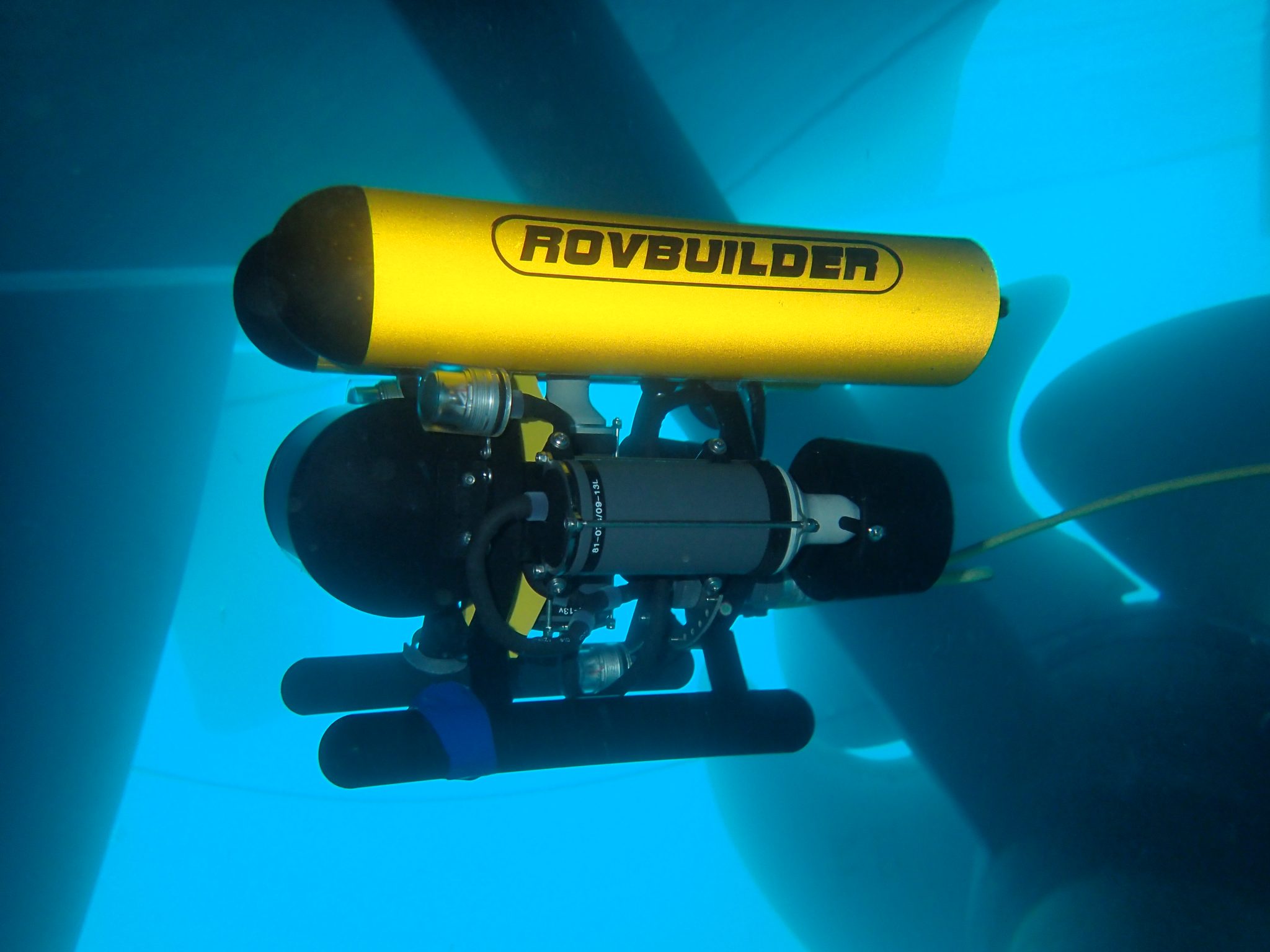
FN Diving provides ROV inspection services for ships, offshore assets and underwater infrastructure. Using compact, rapidly deployable inspection ROVs equipped with HD underwater cameras, powerful lighting and 360° scanning imaging sonar, we can establish the underwater condition of a vessel or structure without immediately mobilising a full commercial diving operation.
ROV inspection is particularly suitable for rapid technical assessments, hull condition checks, fouling inspections, suspected underwater damage and areas that are difficult for commercial divers to access.
Typical ROV inspections include:
- Underwater hull plating
- Vertical sides and flat bottom
- Propellers and propeller blades
- Rudders and steering components
- Bow and stern thrusters
- Thruster tunnels
- Rope guards and shaft areas
- Stern tube and shaft seals
- Sea chests and gratings
- Overboard discharges
- Scrubber outlets
- Bilge keels
- Anodes and ICCP systems
- Transducers and speed log sensors
- Intake and discharge openings
- Marine growth and hull fouling
- Coating condition
- Visible underwater damage
Underwater video and still images can be recorded during the inspection, allowing findings to be reviewed by the vessel’s superintendent, chief engineer or technical management.
When an ROV inspection identifies a problem requiring physical measurements, NDT, cleaning or repair, FN Diving can follow up with a commercial diving team.
ROV Hull Inspection and Fouling Assessment
Hull and propeller fouling can increase resistance and negatively affect vessel performance and fuel efficiency.
An underwater ROV inspection provides a fast method of establishing the actual fouling condition before deciding whether hull cleaning or propeller polishing is required.
Representative areas can be inspected, including the vertical sides, flat bottom, boot-top area, bilge areas, sea chests, thruster tunnels, rudder, propeller and stern area.
This gives the shipowner or technical manager visual evidence of the underwater condition instead of relying solely on estimated fouling levels.
FN Diving can subsequently carry out targeted hull cleaning, propeller polishing or a more detailed diver inspection where required.
360° Scanning Sonar for Underwater Inspection
Underwater cameras depend on water visibility. In ports, rivers and industrial waterways, visibility can be severely restricted.
For these conditions, our inspection ROV can be equipped with high-resolution 360° scanning imaging sonar.
Instead of relying on visible light, the sonar transmits acoustic signals through the water and detects reflections from underwater objects and structures.
Our scanning sonar operates at approximately 750 kHz and provides:
- Up to 360° scanning around the ROV
- Nominal scanning range up to 50 metres
- Approximately 2° horizontal acoustic beam width
- Approximately 0.9° mechanical scanning resolution
- Real-time acoustic imaging of underwater surroundings
This allows our ROV pilots to detect and locate underwater structures and objects even when they cannot yet be clearly identified by camera.
Typical sonar targets include ship hulls, quay walls, piles, pipelines, anchors, chains, ropes, cables, debris, submerged structures and other underwater obstacles.
Actual usable sonar range and image quality depend on water conditions and the size, material, geometry and orientation of the target.
ROV Inspection in Poor or Zero Visibility
Poor underwater visibility is common in major ports and inland waterways.
When camera visibility becomes limited, imaging sonar provides an additional method of navigating towards and locating underwater structures.
The sonar can be used to determine the approximate position, distance and orientation of a target. The ROV can then approach the area and use its underwater cameras and lighting for closer visual inspection wherever visibility permits.
Combining sonar with visual inspection gives FN Diving an important additional capability for underwater surveys in turbid or dark water.
It is particularly useful when the first objective is to locate an object, establish the general condition of an underwater structure or safely guide the ROV towards the required inspection area.
Bow Thruster and Stern Thruster ROV Inspection
Compact ROVs are particularly useful for inspecting areas that are difficult or impossible for a commercial diver to enter.
A typical example is a bow or stern thruster tunnel protected by gratings.
When there are indications of a technical defect inside the thruster tunnel, removing a complete grating simply to inspect the thruster can create unnecessary work and vessel downtime.
Where the grating openings provide sufficient access, FN Diving can deploy a compact ROV through the grating to inspect the thruster internally.
The ROV can visually inspect accessible areas of the propeller blades, hub, tunnel and surrounding components before deciding whether the grating needs to be removed for further inspection or repair.
This gives the vessel’s technical team valuable information before starting a larger underwater intervention.

Propeller and Rudder ROV Inspection
A rapid ROV inspection can provide an initial assessment following suspected propeller, rudder or stern gear damage.
The ROV can inspect visible areas of the propeller blades, blade tips, hub, rope guard, rudder and surrounding stern arrangement.
This can be particularly useful following:
- Suspected propeller damage
- Contact or impact
- Grounding
- Abnormal vibration
- Reduced vessel performance
- Suspected rope or fishing-net entanglement
- Heavy weather
- Before or after propeller polishing
If accurate dimensional measurements, blade geometry checks, shaft or rudder clearances or physical verification are required, FN Diving can subsequently deploy commercial divers with the appropriate measuring equipment.
Sea Chest, Intake and Overboard ROV Inspection
Sea chests and underwater openings can be rapidly assessed using an ROV.
The inspection can provide information about:
- Sea chest gratings
- Missing or damaged grating bars
- Marine growth
- Blockages
- Foreign objects
- Intake openings
- Overboard discharges
- Scrubber outlets
- Visible corrosion
- Coating damage
This can be particularly useful when a vessel experiences reduced cooling-water flow or another suspected problem with an underwater intake or discharge.
If cleaning, blanking, measurements or repair are required, FN Diving can continue the operation with a commercial diving team.
FPSO, Pipe and Overboard Valve Inspections
FN Diving also deploys compact ROV systems for specialised internal inspections on offshore and industrial assets.
Our ROVs have been used to inspect the internals of pipes and overboard valves on FPSO systems.
Where the dimensions, access and system configuration permit, a compact ROV can enter areas that would otherwise require considerable preparation to inspect.
This can provide valuable visual information before deciding whether a system needs to be blanked, dismantled or physically inspected by divers or technicians.
Applications can include:
- Pipe internal inspections
- Overboard valve inspections
- Valve and flange inspections
- FPSO underwater systems
- Intake systems
- Discharge systems
- Ballast tanks
- Water tanks
- Reservoirs
- Confined underwater spaces
The objective is to establish the condition first and determine what further intervention, if any, is required.
Class-Approved ROV Inspection for UWILD and In-Water Surveys
Our ROV capability can be used as part of underwater class inspections and surveys, allowing suitable areas of the vessel to be inspected and documented using high-definition underwater video.
Typical areas covered during an ROV-assisted UWILD or In-Water Survey can include:
- Underwater hull plating
- Flat bottom and vertical sides
- Hull coating condition
- Propeller and propeller blades
- Rudder
- Bow and stern thrusters
- Sea chests and gratings
- Bilge keels
- Anodes
- ICCP components
- Overboard discharges
- Scrubber outlets
- Other underwater appendages
Live ROV footage can be viewed from the surface, allowing the attending class surveyor and vessel representatives to follow relevant parts of the underwater inspection in real time.
Recorded video and still images can be used as part of the inspection documentation.
Where the survey scope requires physical measurements, clearance measurements, cleaning, NDT or direct verification, FN Diving can deploy its commercial divers during the same operation.
This allows ROV inspection and commercial diving to be combined into one efficient UWILD operation, with FN Diving providing the complete underwater survey capability from a single contractor.
Underwater Search with ROV and Sonar
The combination of underwater video and 360° scanning imaging sonar also makes the ROV suitable for underwater search and object-location operations.
In poor visibility, an object can be detected acoustically before it can be identified visually.
Typical underwater search operations include locating:
- Anchors
- Anchor chains
- Cables
- Ropes
- Lost equipment
- Submerged machinery
- Debris
- Damaged components
- Underwater obstructions
- Objects on the seabed
Once a target has been located using sonar, the ROV can approach it for visual identification wherever conditions permit.
If recovery is required, FN Diving can subsequently deploy commercial divers and appropriate lifting or recovery equipment.
Quay Wall, Jetty and Underwater Infrastructure Inspection
ROV inspection is not limited to vessels.
FN Diving also uses ROV technology for the inspection of marine, port and industrial underwater infrastructure.
Typical applications include:
- Quay walls
- Sheet piling
- Jetties
- Piles and pile foundations
- Dolphins
- Fender structures
- Locks and gates
- Bridge foundations
- Cooling-water systems
- Intake structures
- Pipelines
- Reservoirs
- Submerged pipework
- Screens and gratings
- Mooring structures
- Underwater cables
The combination of underwater video and scanning sonar can be used to locate structures, establish their condition and identify areas requiring closer inspection.
Where physical measurements, NDT or repair are required, FN Diving can follow the ROV inspection with a commercial diving operation.
ROV Inspection Before Commercial Diving
An ROV can also be deployed before a commercial diving operation to establish the underwater situation before divers enter the water.
This is particularly useful following an incident or when the exact condition below the waterline is unknown.
The ROV can identify the work area, visible damage, access restrictions and potential underwater hazards.
This allows the diving team to prepare the correct tools, equipment and repair materials before starting the underwater intervention.
For urgent underwater repairs, this can save valuable operational time.
Live Underwater ROV Inspection
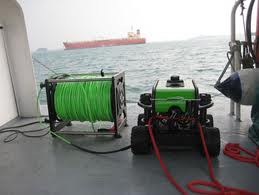
ROV imagery can be viewed live at the surface throughout the underwater operation.
This allows the vessel’s superintendent, chief engineer, technical manager, client representative or attending class surveyor to follow the inspection and request additional attention to specific areas.
Potential defects can therefore be investigated immediately while the ROV is still underwater.
Relevant video, photographs and sonar images can also be recorded for subsequent technical review and reporting.
ROV Inspection Reports
Depending on the required scope, FN Diving can provide:
- HD underwater video
- Underwater photographs
- Recorded inspection footage
- Sonar imagery
- Documented observations
- Identification of visible defects
- Hull fouling assessment
- Coating condition observations
- Marine growth assessment
- Component-specific findings
- Class survey documentation
- Technical recommendations
- Recommendations for further inspection or repair
For systematic inspections, the vessel or underwater structure can be divided into defined inspection areas so observations can be clearly related to their underwater location.

From ROV Inspection to Commercial Diving and Underwater Repair
The advantage of combining ROV technology with FN Diving’s commercial diving capability is that the operation does not have to stop when a problem is identified.
If the ROV identifies propeller damage, a blocked sea chest, damaged grating, rope entanglement, damaged anodes, coating damage, a defective overboard or another underwater problem, our commercial diving team can continue with the required inspection or repair.
FN Diving can provide:
- Detailed diver inspections
- Dimensional measurements
- Propeller shaft and rudder clearance measurements
- NDT
- Hull cleaning
- Propeller polishing
- Blanking
- Welding and cutting
- Anode replacement
- Sea chest repairs
- Propeller repairs
- Thruster repairs
- Other underwater mechanical repairs
Where technically and operationally possible, inspection and repair can be completed while the vessel remains afloat, helping to minimise off-hire and avoid unnecessary dry docking.
ROV Inspection Rotterdam
FN Diving operates directly from the Port of Rotterdam and provides 24/7 ROV inspection and commercial diving services.
Typical ROV operations in Rotterdam include:
- Ship hull inspections
- UWILD and In-Water Surveys
- Hull fouling assessments
- Propeller and rudder inspections
- Bow and stern thruster inspections
- Sea chest inspections
- Sonar-assisted underwater inspections
- Underwater searches
- Suspected underwater damage
- Preliminary inspections before underwater repair
Our permanent presence in Rotterdam allows rapid mobilisation throughout the port.
ROV Inspection Algeciras and Worldwide
FN Diving also operates from Algeciras, providing ROV inspection, commercial diving and underwater repair services for vessels calling Southern Spain and the Strait of Gibraltar.
Our portable ROV systems can also be mobilised to Amsterdam, IJmuiden, Antwerp, Vlissingen, Zeebrugge, Hamburg, Bremerhaven, Le Havre and other European ports.
Worldwide mobilisation is available for suitable projects.
Does an ROV replace a commercial diver?
Not in every situation. An ROV is highly effective for visual inspection, sonar search, condition assessment and restricted-access areas. Commercial divers are required when physical measurements, NDT, cleaning, installation or underwater repair are necessary.
FN Diving provides both capabilities.
ROV Inspection, UWILD and Underwater Repair - 24/7
From a rapid underwater hull inspection to a class-approved UWILD, sonar search or detailed underwater repair, FN Diving provides the complete underwater operation from one contractor.
Our combination of compact ROV technology, HD underwater video, 360° scanning sonar and commercial diving allows us to establish the underwater condition, identify the problem and immediately provide the next technical step when required.
Recent work
Examples of this service carried out by FN Diving:
Most often performed in the Port of Rotterdam; also available in Port of Antwerp, Port of Amsterdam, Port of Hamburg and from our Spanish base in Port of Algeciras Spain. See all service locations or contact us for any port worldwide.